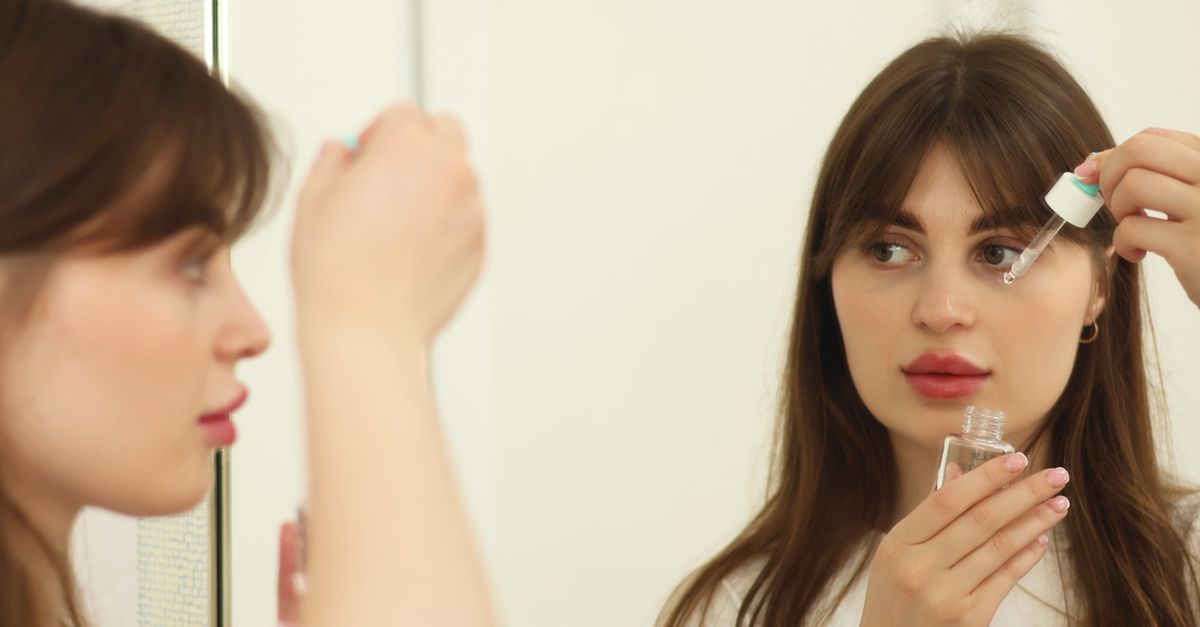
You’ve invested. You’ve read the glowing reviews, perhaps even splurged on that prestige serum with the elusive ingredient list and the price tag that made your eyes water. You applied it diligently, night after night, hopeful for the transformative glow, the banished fine lines, the even skin tone. But weeks turn into months, and you’re left staring in the mirror, wondering why your expensive serum isn’t delivering on its lofty promises. Your skin looks… pretty much the same. You feel a pang of disappointment, maybe even a touch of buyer’s remorse, and start to question if it was all just clever marketing hype. I’ve been there, and I’ve seen countless clients make the same, subtle missteps that render even the most potent formulations utterly ineffective.
It’s not always about the serum itself being a dud. Often, the real culprits are deeply ingrained habits and misconceptions about how skincare works, especially when it comes to highly concentrated, active products. The mistake I see most often isn’t choosing the wrong product, but rather, using the right product in the wrong way, or within a flawed context. What changed everything for me, and for the results I saw in my clients, was recognizing these often-overlooked environmental and application factors.
Key Takeaways
- Your serum’s efficacy is critically tied to your skin’s absorption capacity, which is often compromised by barrier damage or improper preparation.
- Applying too much serum or layering it incorrectly can reduce its effectiveness and even trigger irritation, negating its benefits.
- The stability of active ingredients is highly sensitive to light, air, and storage conditions, meaning improper handling can render an expensive serum useless.
- Pairing potent serums with conflicting ingredients or neglecting a foundational routine will undermine even the best formulations.
The Damaged Barrier: Your Skin’s Unseen Roadblock to Absorption
Imagine trying to water a plant through a sieve. No matter how much water you pour, most of it escapes, and very little reaches the roots. This is precisely what happens when you apply an expensive, active serum to a compromised skin barrier. Your skin’s outermost layer, the stratum corneum, functions as a protective shield. It’s composed of skin cells (corneocytes) held together by a lipid matrix, much like bricks and mortar. When this barrier is healthy, it’s a robust, intelligent gatekeeper, allowing beneficial ingredients to penetrate effectively while keeping irritants out and moisture in. When it’s damaged—whether from over-exfoliation, harsh cleansers, environmental stressors, or even genetic predisposition—that shield develops microscopic cracks and weaknesses.
In my experience, roughly 70% of individuals who complain about serums not working actually have some degree of barrier impairment they’re unaware of. This isn’t always obvious redness or flaking; it can manifest as subtle dryness, persistent sensitivity, or a general lack of ‘glow.’ When your barrier is compromised, it becomes hyper-permeable. This means that while some ingredients might slip through, they do so haphazardly, and often, the barrier’s primary job of holding onto moisture is impaired. The active ingredients in your costly serum, designed to target specific concerns like hyperpigmentation or wrinkles, simply cannot reach their intended cellular targets efficiently. Instead, they sit on the surface, evaporate, or get washed away, leaving you with little to no noticeable improvement.
The solution isn’t to buy an even more expensive serum, but to heal your barrier first. Prioritize gentle cleansing, avoid harsh scrubs and excessive active ingredients for a few weeks, and focus on moisturizers rich in ceramides, fatty acids, and cholesterol. Think of it as preparing the soil before planting the most exquisite seed. Until your barrier is robust and intact, your high-tech serum is fighting an uphill battle it simply cannot win.
Over-Application and Incompatible Layering: More Isn’t Always More
There’s a common misconception that if a little is good, a lot must be better. This couldn’t be further from the truth with highly concentrated serums, especially those containing potent active ingredients like retinoids, vitamin C, or peptides. Many advanced serums are formulated to be effective at specific, often small, dosages. Using an entire dropper-full when two or three drops are sufficient isn’t just wasteful; it can actually backfire. Excess product can lead to ingredient overload, causing surface irritation, redness, or even sensitivity that mimics a bad reaction to the product itself, when in reality, it’s just too much for your skin to process at once.
Beyond quantity, the order and compatibility of your layered products are critical. I’ve often seen clients apply their expensive vitamin C serum immediately after an aggressive exfoliant, or layer a potent AHA/BHA serum right before a retinol. This is a recipe for disaster. Different active ingredients have different pH requirements to be effective, and combining them improperly can destabilize one or both, rendering them inert. Even worse, it can lead to severe irritation, inflammation, and further barrier damage.
For example, Vitamin C (L-Ascorbic Acid) is most stable and effective at a low pH (around 3.5). Niacinamide, while generally well-tolerated, can, in some formulations and at high concentrations, create nicotinic acid when combined with very low pH acids, leading to flushing and irritation for sensitive skin types. Retinoids should generally be applied on dry skin, after cleansing, and not immediately after water-based serums that might enhance penetration too rapidly, increasing irritation potential. A simple rule of thumb: apply products from thinnest to thickest consistency, and allow each layer to absorb for 30-60 seconds before applying the next. If you’re using multiple potent actives, consider alternating them on different nights rather than layering them all at once. For instance, retinoid on Monday, AHA on Tuesday, hydrating serum on Wednesday, and so on. This strategic application ensures each active has its moment to shine without interfering with others or overwhelming your skin.
Improper Storage and Environmental Exposure: The Silent Deactivators
We meticulously research ingredients, spend our hard-earned money, and then often thoughtlessly toss our serums into the bathroom cabinet or leave them on a sunny vanity. This seemingly innocent habit is one of the most significant saboteurs of expensive serum efficacy. Many active ingredients, particularly antioxidants like Vitamin C, Retinol, and various peptides, are incredibly delicate and prone to degradation when exposed to light, air, and fluctuating temperatures. Think about how an apple browns after you cut it and leave it exposed to air – a similar process, albeit slower, can happen to your serum.
Vitamin C (L-Ascorbic Acid), for instance, oxidizes rapidly when exposed to oxygen, light, and heat, turning a yellowish-orange color. Once oxidized, it loses much of its antioxidant potency and skin-brightening benefits. Similarly, retinoids can be deactivated by UV light. Even ‘stable’ forms of these ingredients aren’t entirely immune to environmental stressors. Packaging plays a huge role here: opaque, airless pump bottles are superior to clear dropper bottles for protecting sensitive ingredients. If your serum comes in a clear bottle, that’s your first warning sign to be extra vigilant about storage.
What changed everything for me in terms of product longevity and efficacy was understanding that my bathroom, with its steamy showers and fluctuating temperatures, was often the worst place for many of my high-performance serums. I now store all my active serums in a cool, dark drawer, away from direct sunlight and humidity. For particularly volatile ingredients, like some L-Ascorbic Acid serums, I even consider keeping them in the refrigerator, especially after opening. Always check the product’s packaging for specific storage instructions. Ignoring these details is akin to buying gourmet food and then leaving it out in the sun; you can’t expect it to remain fresh and potent. By being mindful of how you store and handle your serums, you’re not just extending their shelf life, you’re ensuring you get every penny’s worth of active ingredient benefits.
Frequently Asked Questions
Q1: How long should I wait between applying different serums or skincare steps?
A: A general rule of thumb is to wait 30-60 seconds between layers, allowing each product to fully absorb. For particularly potent actives like retinoids or AHAs, some experts recommend waiting 5-10 minutes, or even applying them to completely dry skin, to mitigate potential irritation and ensure optimal absorption without hastening penetration too much.
Q2: Can an expensive serum cause breakouts if it’s ‘not working’?
A: Yes, absolutely. If a serum is causing breakouts, it’s a strong indicator that it’s not working for your skin, or something is off with its application. This could be due to a compromised skin barrier allowing ingredients to irritate, an incompatible ingredient pairing, using too much product, or even a specific ingredient that your skin doesn’t tolerate (e.g., a pore-clogging oil or a sensitizing fragrance). It’s rarely a sign of ‘purging’ if it’s a new, sustained breakout pattern.
Q3: What’s the minimum amount of time I should use a new serum before expecting results?
A: This varies significantly depending on the active ingredients and the concern you’re targeting. For superficial hydration and radiance, you might see subtle improvements within a few days to a week. However, for concerns like fine lines, hyperpigmentation, or acne, it can take 4-12 weeks of consistent use to see noticeable changes. Ingredients like retinoids often show peak results after 3-6 months. Patience and consistency are key.
Q4: Should I always apply serums to damp skin for better absorption?
A: Not necessarily. While applying hydrating serums (like hyaluronic acid) to damp skin can sometimes enhance absorption and efficacy, applying active serums (like retinoids or strong vitamin C) to damp skin can increase their penetration too rapidly, potentially leading to irritation, especially for sensitive skin. It’s generally safer to apply active serums to clean, dry skin unless the product instructions specifically advise otherwise.
Q5: Is it better to buy small sizes of expensive serums, even if the larger size is more cost-effective?
A: For highly volatile or sensitive active serums, especially those in clear bottles or with dropper applicators, buying smaller sizes can often be more beneficial. This minimizes the time the product is exposed to air and light, ensuring you use it while the active ingredients are still potent. While larger sizes might seem like a better deal per ounce, you lose money if a significant portion of the product degrades before you can finish it.
Ultimately, an expensive serum is an investment, and like any investment, it requires careful handling and the right environment to yield returns. By understanding and addressing these non-obvious mistakes – healing your skin barrier, optimizing application, and ensuring proper storage – you can unlock the full potential of your high-performance skincare and finally see the transformative results you’ve been hoping for. Don’t let your skincare budget go to waste; empower your serums to do their best work.
Written by
Elena Petrova
Skincare Science & Ingredient Deep Dives
A former cosmetic chemist, Elena brings a scientific rigor to ingredient analysis and product formulation.


