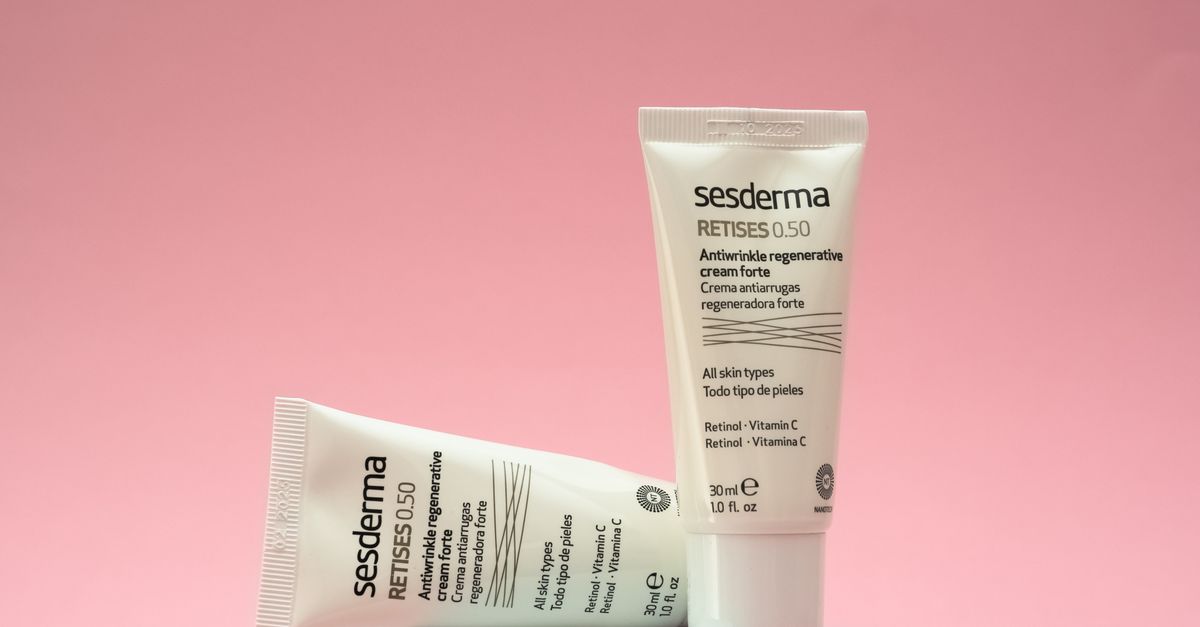
You’ve invested in a cult-favorite retinol serum, you’ve meticulously applied it for weeks, maybe even months, and yet… your fine lines seem just as stubborn, the breakouts persist, and your skin feels more irritated than radiant. You’re not alone. Many believe retinol is a magic bullet, but the truth is, a surprising number of people make crucial mistakes that not only diminish its efficacy but can actually worsen their skin. I’ve seen this time and again in my practice: individuals diligently using what they think is the right approach, only to be met with frustration and a compromised skin barrier.
The promise of retinol is incredible – increased cell turnover, boosted collagen production, reduction in hyperpigmentation, and smoother skin texture. It’s a gold standard ingredient for a reason. However, its power demands respect and a strategic approach. If you’re feeling underwhelmed or actively battling redness and flaking, it’s highly probable you’re making one of the common, yet easily avoidable, missteps that are sabotaging your results. It’s time to stop guessing and start understanding the science behind making retinol truly work for your skin, not against it.
Key Takeaways
- Many common retinol application techniques unknowingly deactivate the product or exacerbate skin irritation, preventing true results.
- The biggest mistake isn’t using retinol, but failing to support your skin barrier and tailor your routine to its specific needs.
- Proper product layering and understanding ingredient compatibility are essential to maximize retinol’s benefits without adverse effects.
- Consistent, long-term use with the right strategy is far more impactful than aggressive, short-term approaches that lead to irritation.
The “More Is Better” Myth: Why Overuse Is Actively Harming Your Skin
When it comes to powerful actives like retinol, our intuition often leads us astray. We think, ‘If a little is good, a lot must be better!’ This couldn’t be further from the truth with retinol. In my experience, the single biggest reason people fail to see positive results, and instead develop angry, red, and flaky skin, is simply using too much, too often, or too strong a concentration too quickly. Your skin needs time to acclimate to retinoids. They work by signaling cells to behave differently, and this process can initially cause irritation as your skin’s cellular turnover speeds up.
Think of it like training for a marathon. You wouldn’t start by running 26 miles on day one; you’d build up gradually. The same principle applies here. If you jump straight into a high-strength retinol (0.5% or 1%) every night, your skin barrier doesn’t stand a chance. It will become compromised, leading to increased trans-epidermal water loss, heightened sensitivity, and a significantly reduced ability to tolerate any active ingredients, including the very retinol you’re trying to use. When the barrier is compromised, all you’re doing is creating inflammation, which in turn can exacerbate issues like hyperpigmentation and even contribute to premature aging in the long run. My recommendation is always to start with a low concentration (0.25% or even 0.05% for sensitive skin) just once or twice a week. Gradually increase frequency to every other night, and only then consider moving to a higher strength if your skin shows no signs of irritation after several months of consistent use. Patience is not just a virtue here; it’s a necessity for real results.
Skipping Crucial Skin Barrier Support: The Unsung Heroes of Retinol Success
Retinol is a demanding ingredient. While it offers incredible benefits, it also requires your skin to work harder. This increased activity, especially in the initial stages, can compromise your skin’s natural protective barrier. This is where most people make their second major mistake: they focus solely on the retinol and neglect the vital supporting cast of ingredients that protect and repair the skin barrier. I’ve witnessed countless individuals meticulously applying their retinol, only to follow it with nothing, or worse, another drying active.
For retinol to work effectively without causing irritation, your skin barrier must be robust and healthy. This means incorporating ingredients that actively soothe, hydrate, and fortify the skin. Look for products rich in ceramides, hyaluronic acid, cholesterol, fatty acids, and niacinamide. These ingredients act like the mortar between the bricks of your skin barrier, keeping it strong and preventing moisture loss. A common and highly effective strategy is the ‘sandwich method,’ especially for beginners or those with sensitive skin. Apply a layer of a bland, hydrating moisturizer, then your retinol, and then another layer of moisturizer. This buffers the retinol, allowing your skin to adapt more gently. In my experience, failing to incorporate a rich, reparative moisturizer, especially at night after retinol application, is a guaranteed route to dry, flaky, and irritated skin that simply cannot reap retinol’s rewards. Your skin barrier isn’t just about comfort; it’s fundamental to ingredient efficacy.
The Product Layering Blunder: Why Your Routine Is Deactivating Your Retinol
It’s not just what you use, but when and how you use it in conjunction with retinol that determines its success. A common scenario I encounter is individuals layering retinol with other powerful actives like AHAs, BHAs, or even strong Vitamin C derivatives in the same routine, or even worse, at the same time. While these ingredients all have their place, combining them carelessly with retinol is a recipe for disaster. Retinol works best in a specific pH environment, and mixing it with highly acidic ingredients can not only deactivate the retinol but also significantly increase irritation, leading to that tell-tale redness and stinging sensation.
Consider the chemical interactions. Alpha Hydroxy Acids (AHAs) and Beta Hydroxy Acids (BHAs) are exfoliants that increase cell turnover, much like retinol, but through a different mechanism. Using them concurrently is a form of chemical over-exfoliation that will overwhelm your skin’s natural defenses. Similarly, certain forms of Vitamin C can be quite acidic. While some stabilized forms can be used in the same routine, it’s generally safer and more effective to separate them. My recommendation is to use your exfoliating acids on alternate nights from your retinol. For Vitamin C, use it in the morning, and save retinol for your evening routine. When applying retinol, always apply it to clean, dry skin to minimize irritation and maximize absorption. Damp skin can increase the penetration of active ingredients, making potent ones like retinol even more irritating. Wait at least 15-20 minutes after cleansing before applying your retinol, and then follow with your barrier-supporting moisturizer. This strategic layering ensures each product has its moment to shine without undermining the others or your skin’s health.
Impatience and Inconsistency: Why You’re Giving Up Too Soon
One of the most disheartening aspects of skincare is the expectation of instant gratification. We live in a world of quick fixes, but retinol simply doesn’t operate on that timeline. Many people throw in the towel after a few weeks, lamenting that ‘retinol doesn’t work for me’ because they haven’t seen dramatic changes. What they fail to realize is that true cellular change and collagen remodeling take time – often 3-6 months of consistent use before significant improvements become visible. The skin’s natural cell turnover cycle is about 28 days, and retinol needs several cycles to make a noticeable difference.
The other side of this coin is inconsistency. You might use it diligently for two weeks, then get scared by some mild flaking and stop for a month, then restart. This stop-and-start pattern prevents your skin from ever fully adapting and benefiting. It’s like trying to build muscle by lifting weights once every few weeks; you won’t see progress. The key to retinol success is consistent, long-term, and patient application. The initial ‘retinization’ phase, characterized by mild dryness, redness, or flaking, is a normal part of your skin adapting. This is where many people panic and quit. Instead of quitting, scale back the frequency (e.g., from three times a week to twice), ensure you’re using ample barrier support, and ride it out. What changed everything for me and for my clients was understanding that small, consistent actions over a long period yield monumental results, especially with an ingredient as powerful as retinol. Don’t underestimate the power of showing up for your skin, day in and day out, with a smart, sustainable routine.
Forgetting SPF: Making Your Retinol Effort Counterproductive
This isn’t a direct reason why your retinol isn’t working, but it’s a critical error that makes all your retinol efforts counterproductive, and can even accelerate photoaging. Retinoids, by their very nature of increasing cell turnover, make your skin more sensitive to the sun. If you’re diligently using retinol at night to improve skin texture, reduce wrinkles, and fade hyperpigmentation, but then step out into the sun each day without adequate sun protection, you are essentially undoing all that hard work and potentially causing more damage.
The increased cellular turnover brings newer, more delicate skin cells to the surface, which are more susceptible to UV radiation. This heightened sensitivity means that unprotected sun exposure can lead to increased hyperpigmentation, collagen breakdown, and a higher risk of sunburn. The very issues you’re trying to resolve with retinol will be exacerbated. It’s an absolute non-negotiable: if you’re using any form of retinoid, you must wear a broad-spectrum sunscreen with an SPF of 30 or higher every single day, rain or shine. And I mean every single day, even indoors if you’re near windows. Reapply every two hours if you’re outdoors. Without this fundamental step, your retinol application becomes a risky endeavor, potentially leading to more harm than good. Consider SPF the protective shield that allows retinol to perform its magic safely and effectively.
Frequently Asked Questions
Q1: How long does it actually take to see results from retinol?
A1: Most people start noticing subtle improvements in skin texture and tone after 8-12 weeks of consistent use. For more significant changes like reduction in fine lines or hyperpigmentation, expect to wait 3-6 months, and sometimes up to a year for the full effect. Patience and consistency are truly key.
Q2: Can I use retinol every night, or is that too much?
A2: For most people, especially beginners, using retinol every night initially is too much and can lead to irritation. Start with 1-2 times a week and gradually increase frequency as your skin builds tolerance. Many find optimal results using it 3-4 times a week, allowing for recovery nights. Only consider nightly use if your skin shows no signs of irritation after several months of consistent use at a lower frequency.
Q3: My skin is flaking and red from retinol. Should I stop using it?
A3: Mild flaking and redness during the initial ‘retinization’ phase are normal. Don’t stop entirely, but scale back your frequency (e.g., use it once a week instead of twice), ensure you’re using a rich, barrier-repairing moisturizer, and consider the ‘sandwich method.’ If irritation is severe, painful, or persistent, take a break for a few days to a week to let your skin heal, then reintroduce at a lower frequency and concentration.
Q4: Does applying retinol to damp skin make it more effective?
A4: No, quite the opposite. Applying retinol to damp skin can increase its penetration, making it potentially more irritating and increasing the likelihood of adverse reactions like redness and flaking. Always apply retinol to clean, thoroughly dry skin to minimize irritation and allow for a more controlled absorption. Wait 15-20 minutes after cleansing before application.
Q5: Is there a ‘best’ time of day to use retinol?
A5: Retinol is best applied in the evening. Retinoids can increase photosensitivity, making your skin more susceptible to sun damage. Furthermore, some forms of retinol are photosensitive themselves and can degrade when exposed to sunlight. Applying it at night allows it to work effectively without immediate sun exposure, and you can follow up with a strong SPF in the morning.
Q6: What’s the difference between retinol, retinaldehyde, and tretinoin?
A6: These are all retinoids, differing in potency and how many steps they require to convert to retinoic acid (the active form in the skin). Retinol is generally the mildest, requiring two conversion steps. Retinaldehyde (or retinal) is stronger than retinol, requiring only one conversion step, making it faster-acting and often more effective. Tretinoin (Retin-A) is prescription-strength retinoic acid, meaning it doesn’t require any conversion and is the most potent. Start with retinol and only move up in strength under expert guidance.
If you’ve been using retinol with disappointing results or experiencing persistent irritation, it’s highly likely that one of these common mistakes is at play. Retinol is a powerful tool, but like any powerful tool, it requires the right technique and respect for its capabilities. Don’t be fooled by the ‘more is better’ fallacy, neglect your skin barrier, haphazardly layer products, or give up too soon. Instead, embrace a measured, patient, and supportive approach. Start low and go slow, commit to consistent use, prioritize your skin barrier, be mindful of your product pairings, and never, ever skip your daily SPF. By making these critical adjustments, you won’t just avoid irritation – you’ll unlock the true, transformative potential of retinol, paving the way for the smoother, clearer, and more youthful-looking skin you’ve been dreaming of. Your radiant complexion is within reach; it just needs the right strategy.
Written by
Elena Petrova
Skincare Science & Ingredient Deep Dives
A former cosmetic chemist, Elena brings a scientific rigor to ingredient analysis and product formulation.


