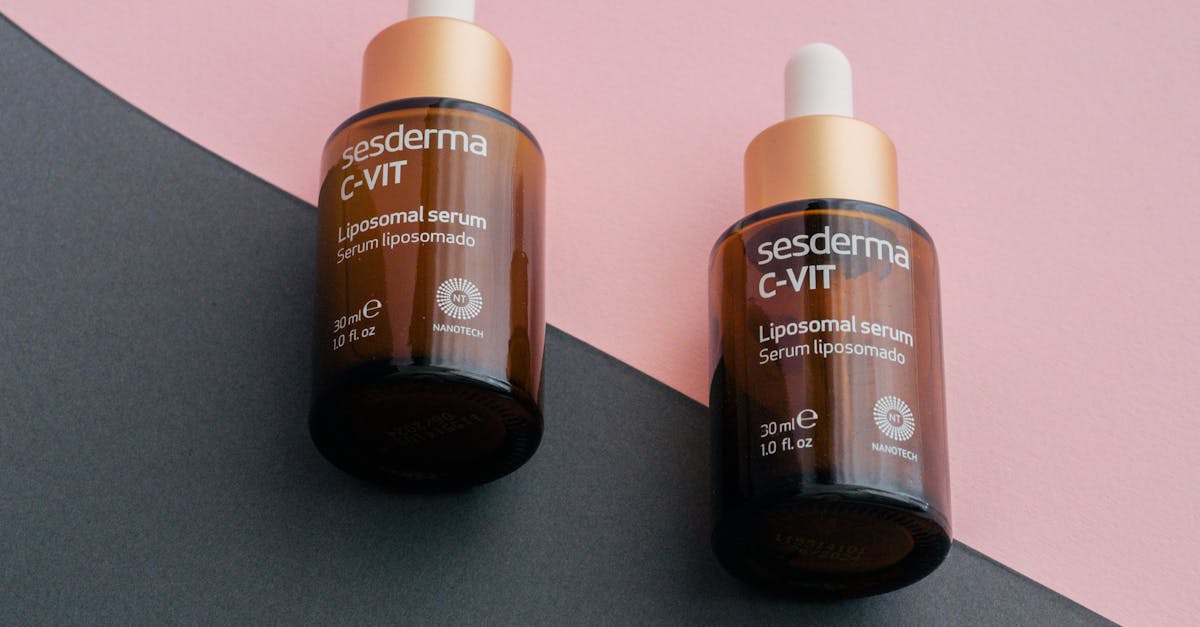
You’ve invested in that shiny, expensive bottle of Vitamin C serum. You’ve dutifully applied it every morning, perhaps for weeks, even months, expecting the glowing, even-toned, hyperpigmentation-free skin you’ve seen touted all over social media. But instead, you’re looking in the mirror, and… nothing. Or worse, maybe you’re experiencing irritation, breakouts, or a strange orange tint to your skin. What gives? Is Vitamin C just another overhyped skincare trend, or are you missing something critical in its application and storage?
In my experience as someone deeply immersed in skincare science, the most common reason people don’t see results from their Vitamin C serum isn’t that the ingredient itself is ineffective, but rather that the product formulation, packaging, storage, or even their application method is fundamentally flawed. It’s a powerhouse antioxidant, a collagen booster, and a brightening agent, but it’s also incredibly finicky. Treating it like any other serum is a recipe for disappointment and wasted money. Let’s dive into why your Vitamin C isn’t delivering, and more importantly, how to finally unlock its full potential.
Key Takeaways
- The right Vitamin C formulation (L-Ascorbic Acid concentration and pH) is paramount for efficacy and absorption.
- Improper packaging and storage are the top culprits for Vitamin C degradation, rendering it useless or even harmful.
- Combining Vitamin C with other active ingredients or applying it incorrectly can neutralize its benefits or cause irritation.
- Consistency is key, but so is choosing a product with supporting antioxidants and proper stabilization for long-term results.
The Unstable Truth: Why Formulation and Packaging Are Everything
Many consumers believe all Vitamin C serums are created equal, or that a higher concentration automatically means better results. This couldn’t be further from the truth. The most effective form of Vitamin C for skincare is L-Ascorbic Acid (L-AA). It’s also the most unstable. L-AA is highly susceptible to oxidation when exposed to light, air, and heat, rapidly converting into dehydroascorbic acid (DHAA), which is less effective, and eventually to erythrulose, which can tint skin orange. This degradation can happen much faster than you think, often even before you finish the bottle.
The sweet spot for L-AA concentration is typically between 10% and 20%. Below 10%, the effects are often negligible. Above 20%, the increased efficacy is minimal, but the risk of irritation skyrockets. Crucially, L-AA needs to be formulated at a low pH (typically 2.5-3.5) to be effectively absorbed by the skin. If the pH is too high, it simply sits on the surface, doing nothing. Many cheaper formulations fail here, either using less effective derivatives or an incorrect pH, making them feel nice but deliver no real punch.
Furthermore, packaging is non-negotiable. If your Vitamin C serum comes in a clear bottle with a dropper, you’re likely wasting your money. The constant exposure to air and light with each use is rapidly oxidizing the product. Effective Vitamin C serums must be packaged in opaque, airless pump bottles or dark glass bottles with airtight droppers to minimize degradation. If you open a bottle and it already smells metallic or looks brownish, it’s oxidized and should be discarded. Don’t risk applying a degraded product, as it can actually generate free radicals and damage your skin instead of protecting it.
The Storage Blunder: Your Bathroom Shelf Is Killing Your Serum
After formulation and packaging, improper storage is the single biggest reason your Vitamin C serum isn’t working. Most people store their skincare products in their bathroom cabinet or on an open shelf, often exposed to fluctuating temperatures and light. For L-Ascorbic Acid, this is a death sentence. Heat, light, and air are its sworn enemies.
Think about it: your bathroom often gets steamy from showers, heating up the entire space. Even indirect sunlight through a window can accelerate oxidation. What changed everything for me, and what I recommend to everyone, is storing your Vitamin C serum in the refrigerator. The cool, dark environment significantly slows down the oxidation process, preserving its potency for much longer. I’ve seen bottles last twice as long when kept in the fridge compared to a bathroom shelf, maintaining their clear, fresh color and efficacy.
Another common mistake is buying large bottles. While it might seem more economical, a large bottle of L-Ascorbic Acid serum, once opened, begins its countdown. Unless you use it up very quickly (within 2-3 months), a significant portion will likely oxidize before you finish it. Opt for smaller sizes, even if the cost per ounce is slightly higher, to ensure you’re always applying a fresh, potent product. The hidden cost of a large, cheap bottle is its diminished effectiveness over time.
The Interaction Trap: What You’re Mixing It With
Skincare enthusiasts love layering, but some combinations can render your Vitamin C useless or even cause irritation. The most frequent mistake I see is combining L-Ascorbic Acid with strong exfoliating acids like AHAs (Glycolic Acid, Lactic Acid) or BHAs (Salicylic Acid) in the same routine, particularly if applied one immediately after the other. While some products are formulated to combine them safely, applying them separately can be problematic.
The low pH required for L-Ascorbic Acid to penetrate can actually destabilize other acids or, conversely, other high-pH products can raise the pH of your skin, making the L-AA less effective. A good rule of thumb is to apply L-Ascorbic Acid in the morning, after cleansing and toning, and let it fully absorb for a few minutes before applying other serums or moisturizers. If you’re using AHAs/BHAs, reserve them for your evening routine.
Another ingredient to be cautious with is Niacinamide (Vitamin B3). There’s an old misconception that L-Ascorbic Acid and Niacinamide react to form nicotinic acid, causing redness and flushing. Modern research has largely debunked this for well-formulated products, especially when applied at different times or if there’s sufficient time between applications. However, if you have sensitive skin, it’s safer to use Vitamin C in the morning and Niacinamide in the evening, or to ensure products are formulated to be compatible. The risk is less about inactivation and more about potential irritation for some individuals.
The Application Misstep: Are You Getting It Where It Needs to Go?
Even with the perfect product, stored perfectly, your application technique can make or break its efficacy. Vitamin C serum should be applied to clean, dry skin. Why dry? Because water on the skin’s surface can increase its pH, reducing the L-Ascorbic Acid’s ability to penetrate. After cleansing, gently pat your face dry and wait a minute or two before applying your serum.
The amount matters too. More is not always better. For most concentrated serums, 3-5 drops are sufficient for the entire face and neck. Gently press or pat the serum into your skin rather than rubbing it vigorously. This ensures even distribution and minimizes product waste. Allow a few minutes for the serum to fully absorb before moving on to your next step, like a hydrating serum or moisturizer. This pause gives the active ingredients time to work their magic without being diluted or interfered with.
And perhaps the most overlooked application step: sunscreen. Vitamin C is a powerful antioxidant that helps protect against UV damage, but it’s not a sunscreen on its own. It works synergistically with sunscreen to offer enhanced protection. If you’re applying Vitamin C in the morning and skipping sunscreen, you’re missing a huge piece of the puzzle and leaving your skin vulnerable to the very damage Vitamin C is trying to prevent and repair. Always follow your morning Vitamin C application with a broad-spectrum SPF 30 or higher, every single day, rain or shine.
Beyond the Bottle: Supporting Your Skin’s Antioxidant Network
While a potent Vitamin C serum is crucial, it’s part of a larger picture. True skin transformation comes from supporting your skin’s overall health and antioxidant defense system. Many effective Vitamin C serums are formulated with other antioxidants, such as Vitamin E and Ferulic Acid. This is not just a marketing gimmick; these ingredients actually stabilize L-Ascorbic Acid, enhancing its efficacy and prolonging its shelf life within the product.
Vitamin E, a lipid-soluble antioxidant, works hand-in-hand with water-soluble Vitamin C, regenerating it after it neutralizes free radicals. Ferulic Acid, a plant-derived antioxidant, not only offers its own protective benefits but also further stabilizes the C and E combination, multiplying their photoprotective properties by eight times. If your current serum doesn’t include these co-antioxidants, consider upgrading to one that does. The synergy is undeniable and dramatically improves the results you’ll see.
Furthermore, a holistic approach to skin health, including a balanced diet rich in antioxidants, adequate sleep, and stress management, will amplify the benefits of your skincare products. Think of your Vitamin C serum as a powerful tool, but one that works best within a healthy environment. Don’t expect a single product to magically undo years of neglect or poor lifestyle choices. What changed everything for me was embracing this comprehensive view, understanding that skincare is an extension of overall wellness.
Frequently Asked Questions
Q: My Vitamin C serum turned yellow/orange. Is it still safe to use?
A: No. If your L-Ascorbic Acid serum has turned a noticeable yellow or orange, it has oxidized significantly. While a very light straw color is acceptable, a distinct yellowing or orange tint means it has degraded into less effective or potentially pro-oxidant compounds. Using it could cause irritation or even generate free radicals, damaging your skin. Discard it immediately.
Q: Can I use Vitamin C every day?
A: Yes, for most people, daily application of Vitamin C (typically in the morning) is ideal to achieve and maintain its benefits. Start with a lower concentration (10-15%) if you have sensitive skin, and gradually increase if tolerated. Consistency is key for building up antioxidant protection and seeing results in brightening and collagen production.
Q: Should I apply Vitamin C before or after moisturizer?
A: Vitamin C serum should generally be applied after cleansing and toning, but before moisturizer. Serums are typically formulated with smaller molecules designed to penetrate the skin most effectively. Applying them directly to clean, dry skin allows for optimal absorption. Wait a few minutes for the serum to fully absorb before layering on your moisturizer.
Q: Does Vitamin C make my skin more sensitive to the sun?
A: No, quite the opposite. Vitamin C is a powerful antioxidant that helps protect your skin from UV-induced free radical damage, making it an excellent addition to your morning routine when followed by sunscreen. It does not make your skin more photosensitive. However, it’s crucial to always follow up with a broad-spectrum sunscreen as Vitamin C is not a substitute for SPF.
Q: Are Vitamin C derivatives as effective as L-Ascorbic Acid?
A: While some Vitamin C derivatives (like Ascorbyl Tetraisopalmitate, Magnesium Ascorbyl Phosphate, or Sodium Ascorbyl Phosphate) are more stable and less irritating than L-Ascorbic Acid, they generally require conversion within the skin to their active L-Ascorbic Acid form. This conversion process can make them less potent or slower-acting. L-Ascorbic Acid, when properly formulated and stabilized, remains the gold standard for direct, powerful antioxidant and collagen-boosting benefits, although derivatives can be a good option for very sensitive skin.
Ultimately, if you’ve been disappointed by your Vitamin C serum, don’t give up on the ingredient entirely. Instead, become a discerning consumer. Scrutinize the ingredient list for L-Ascorbic Acid, check the concentration, confirm the presence of supporting antioxidants like Vitamin E and Ferulic Acid, and, most critically, evaluate the packaging. Commit to proper storage, ideally in the refrigerator, and refine your application technique. The payoff for this attention to detail is significant: a truly brighter, more even-toned, and protected complexion that radiates health. It’s not just about buying a product; it’s about understanding how to make that product work its hardest for your skin.
Written by
Elena Petrova
Skincare Science & Ingredient Deep Dives
A former cosmetic chemist, Elena brings a scientific rigor to ingredient analysis and product formulation.


